

Photo by Kelly Sikkema on Unsplash
No one would deny that exercise is good for us. But many people don’t realise just how many benefits it can have – or how it can be used to treat a wide range of specific health problems.
We hear a lot about how good exercise is for our general health and wellbeing, particularly in preventing health problems. It’s clear that exercise improves heart health, muscle strength, and even mental health and mood, and can reduce the risk of many diseases. It’s also a common tool for weight loss.
But you might not realise that exercise is also a key part of the effective treatment of health conditions like diabetes, arthritis and cancer, as well as many types of injuries that affect people’s everyday activities.
Exercise is increasingly used alongside medical treatments as an integral part of a person’s recovery from disease or injury. But not just any exercise will do; like medicine, the exercise prescription needs the right type and dose to be effective.
The evidence for exercise as medicine
Exercise has both general and specific benefits for people managing health conditions. For example, it can lead to weight loss, better sleep and improved mental health and wellbeing – all of which support the management of other health conditions.
As well as these general benefits, the right type of exercise can have very specific benefits for particular conditions – including some that affect millions of Australians, like diabetes, heart disease and arthritis. While pharmaceutical medicines generally treat symptoms or modify physiological processes synthetically, exercise can directly improve underlying physiological function.
For example:
- Type 2 diabetes: research shows that exercise reduces insulin resistance and directly lowers blood sugar levels in Type 2 diabetics
- Cardiovascular disease: exercise can reduce cholesterol and blood pressure in people with a history of coronary heart disease
- Arthritis: exercise can increase fluid around the joints, helping arthritis sufferers to move with less pain; improve the circulation of nutrients to joints; and stimulate the release of anti-inflammatory cytokines
There is similar evidence for the role of exercise in managing and treating injuries. While exercising with an injury can feel counterintuitive and uncomfortable in the short term, the right exercise can help injuries heal through increased blood flow and cellular responses; relieve pain through the release of endorphins; and strengthen muscles that help support the injured area.
Case study
Back pain is one of the most common health issues reported by Australian adults and one of the most common reasons people work with us. People with back pain often avoid bending, lifting and other physical activity, because they’re afraid it will make their pain worse. However, in most cases, maintaining movement and exercise will actually improve back pain more than being immobile. When we work with people experiencing back pain, we focus on introducing movements that activate and strengthen muscles that may not be providing enough support to the spine and pelvis. Common areas we target include the glutes and deep core muscles, which help support walking, lifting and spinal stability. By improving strength and movement patterns, we can reduce strain on overworked muscles, improve confidence in movement, and help reduce pain sensitivity over time.
|
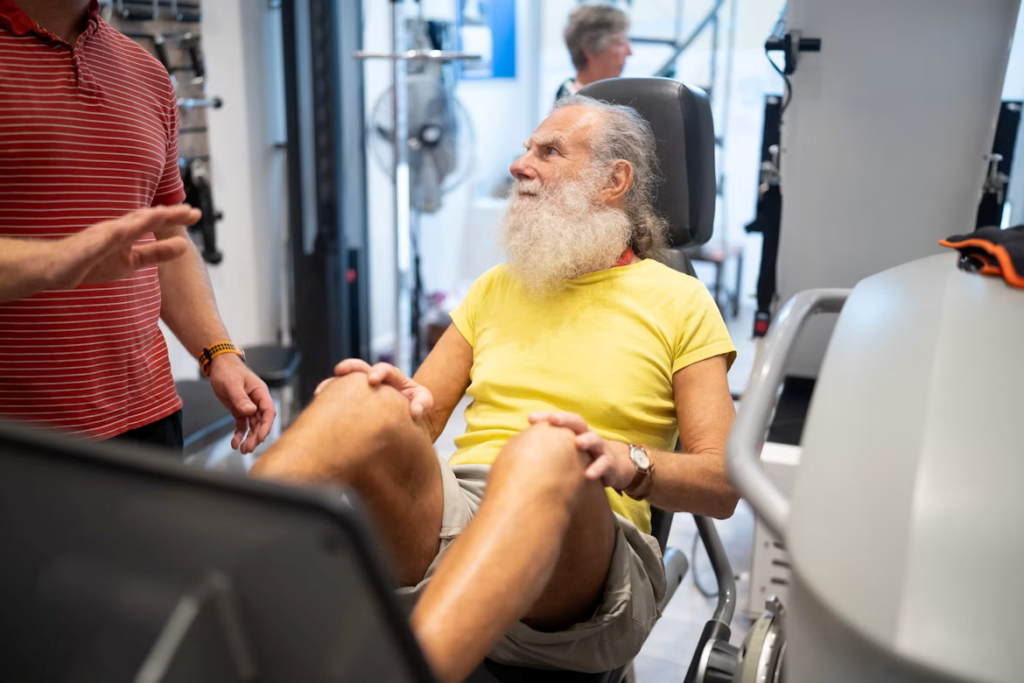
Photo by Centre for Ageing Better on Unsplash
The right exercise prescription
Of course, exercise on its own doesn’t replace medicine. However, the right type of exercise – when prescribed in the right dosage, frequency and progression, and with side effects carefully considered – works alongside other treatments for a better overall outcome.
An exercise program geared towards muscle gain, weight loss or general health improvement won’t necessarily be right for managing and improving serious health conditions. A targeted program for the specific condition being treated will have the best result.
Type
While doctors are increasingly aware of the benefits of exercise as treatment, most aren’t experts in prescribing it the way they are in prescribing medicine – so patients often receive a generic recommendation to ‘walk more’. But walking is rarely enough on its own.
And different conditions need different prescriptions. For example, the best treatment for diabetes won’t be optimal for back pain, which has different underlying physiological processes.
Dosage and frequency
Someone who hasn’t exercised for a while or who has an underlying condition shouldn’t just launch into lifting heavy weights at the gym three times a week – but this is often what people think they need to do.
The idea that if some is good, more must be better, is an easy trap to fall into and seems to make logical sense – but just like doing the wrong type of exercise, doing too much too often can do more harm than good. It could lead to injury or, at the very least, quickly become overwhelming, and result in stopping altogether.
Progression
Doing too much, too soon isn’t good – but nor is sticking to the same routine forever. The body adapts to things it does regularly, so the same movements become less effective over time.
A well-designed program will include gradual progression in the type and amount of exercise to make sure it stays effective.
Similarly, a structured regression may be needed if the body’s response indicates it – for example, if a person experiences abnormal discomfort or other unexpected effects from a particular exercise.
Side effects and interactions
Just like the wrong medicine or wrong dose of medication can cause serious side effects, so can the wrong type or amount of exercise. Even when used appropriately, medicine and exercise can both cause side effects. It’s important to know when these are a problem, and how to manage them.
Case study
One of our patients was referred to us by her doctor not long after coming out of a coma. When we first met her, she had only recently regained feeling on one side of her body. As we gradually reintroduced exercise, some movements caused dizziness and a build-up of pressure in her head. Rather than pushing through these symptoms, we adjusted the exercises and reduced the intensity until her body could tolerate them more comfortably. By closely monitoring her response and progressing at an appropriate rate, she was able to safely rebuild strength, reduce the imbalance between sides, and regain confidence in movement. |

Image by Cliff Booth on Pexels
The right type of support
Many people know exercise matters but struggle to follow through.
Even if we’ve been told to exercise by a doctor, it can be hard to get started, and hard to keep going.
There are many reasons that an exercise prescription isn’t filled. Some people just don’t enjoy exercise. Others lack knowledge or confidence, and just don’t know where or how to start. It’s also common to struggle to fit exercise around our many other commitments.
Working with a professional like an Exercise Physiologist can help overcome these barriers. You will typically commit to a regular appointment, so it’s harder to make excuses to skip it. And if confidence is an issue – if you’re unsure about the exercises or nervous about the environment you’re exercising in – having someone by your side as you do it can be reassuring
While personal trainers can also help design and implement an exercise program, they typically lack specialised training in designing safe and effective programs that target specific health conditions or injuries. This is what an Exercise Physiologist specialises in.
As well as helping with commitment and confidence, getting advice and support from an Exercise Physiologist will ensure you’re doing the right type and amount of exercise for your condition – just as a doctor will prescribe the right type and dosage of medicine. You wouldn’t take heart health medication for arthritis – and exercise is exactly the same.

Photo by bruce mars on Unsplash
Case study
One of our NDIS participants wanted to improve their strength and health but struggled to prioritise exercise amongst the stress and demands of daily life. We provided a tailored exercise program and regular appointments for support and accountability. Over time, their confidence and physical capacity improved, and they began looking forward to their sessions each week. The benefits became so meaningful that they increased their appointments from fortnightly to weekly.
|
How are Exercise Physiologists different?
In Australia, Exercise Physiologists are university-qualified allied health professionals accredited through Exercise & Sports Science Australia (ESSA), the national professional body for exercise and sport science practitioners. ESSA sets the professional standards that ensure Accredited Exercise Physiologists meet strict education, safety, and ethical practice requirements.
Accredited Exercise Physiologists are specifically trained to assess physical function and prescribe safe and effective exercise programs for people living with different conditions.
The goal of Exercise Physiology is to use targeted exercise to improve physical function, support recovery, and enhance overall quality of life.
Exercise Physiologists are experienced at assessing not only what type of exercise can help you, but how it might interact with other conditions you have and where adjustments are needed. They can plan around interactions and other challenges to make sure that the exercise you’re doing is safe and effective.
In clinical practice, Exercise Physiologists commonly work with people experiencing:
- chronic pain
- cardiovascular disease
- diabetes and metabolic conditions
- arthritis and musculoskeletal conditions
- neurological conditions
- mental health conditions
- reduced mobility or balance
- age-related loss of strength and physical capacity.
Final thoughts
Exercise is an important part of treatment for many common health conditions and injuries. When prescribed correctly, it can have a range of both specific and general benefits for individuals with many different health conditions.
People with chronic or acute health conditions, or painful injuries, can struggle to implement regular exercise into their routine. An Accredited Exercise Physiologist can both prescribe the correct type and amount of exercise, and support you to make it a part of your lifestyle – and even become something you will look forward to.
FAQs
Is exercise really as effective as medicine?
For some health conditions, exercise can be as important as medication. Research shows that appropriate exercise can improve blood sugar control, heart health, strength, mobility, balance, pain, and overall wellbeing.
Like medication, exercise works best when the right type, dose, and progression are prescribed for the individual. That’s why a tailored exercise program is often more effective than simply being told to “exercise more”.
Can exercise help with chronic pain?
For many people, yes. We commonly work with people experiencing back pain, arthritis, persistent injuries, and other chronic pain conditions.
Often, pain can lead to reduced activity, stiffness, loss of strength, and movement compensations that make everyday activities more difficult. An Exercise Physiologist can prescribe exercises that help improve strength, confidence, and movement capacity while gradually reducing pain sensitivity.
What health conditions can exercise help with?
Exercise can play an important role in managing conditions such as diabetes, heart disease, arthritis, osteoporosis, chronic pain, neurological conditions, mental health conditions, and many injuries.
At Greater Health, we also regularly support people living with disability, age-related loss of strength and balance, fatigue-related conditions, and those recovering from illness or injury.
Can exercise replace medication?
Exercise should not replace medication without medical advice. However, it can be an important part of treatment alongside medication and other healthcare supports.
People are often referred to Exercise Physiology after visiting their GP for ongoing pain. While medication can help manage symptoms, an Exercise Physiologist can assess whether factors such as stiffness, reduced strength, movement compensations, or poor muscle activation may also be contributing. The right exercise program can help address these issues and improve a person’s ability to move and function with confidence.
What's the difference between an Exercise Physiologist and a Personal Trainer?
Personal Trainers primarily focus on general fitness, exercise coaching, and helping people achieve fitness-related goals.
Exercise Physiologists are university-qualified allied health professionals trained to assess physical function and prescribe exercise for people living with health conditions, injuries, disabilities, chronic pain, and complex medical needs. Because of this, they create exercise programs tailored not only to a person’s goals, but also to their health history, symptoms, medications, and individual circumstances.
Further reading
Exercise & Sports Science Australia (ESSA). Available at: https://www.essa.org.au/
Fairag, M et al. (2024). Exercise as a Therapeutic Intervention for Chronic Disease Management: A Comprehensive Review. Cureus Nov 21;16(11):e74165. Available at: https://pmc.ncbi.nlm.nih.gov/articles/PMC11662992/
Pedersen BK, Saltin B (2015). Exercise as medicine – evidence for prescribing exercise as therapy in 26 different chronic diseases. Scand J Med Sci Sports Dec:25; Suppl 3:1-72.
World Health Organization (WHO). Physical Activity Fact Sheet. Available at: https://www.who.int/news-room/fact-sheets/detail/physical-activity