
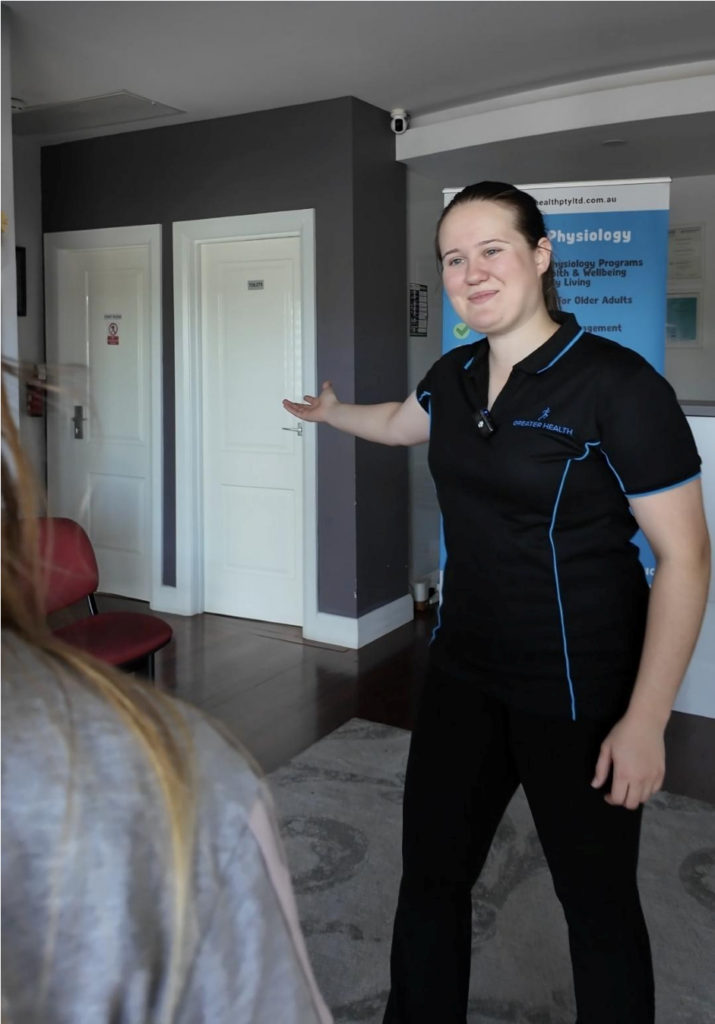
If you’ve found your way here, you’re probably interested in Exercise Physiology. But do you know what an Exercise Physiologist actually does?
This article shares a day in the life of our founder, Caroline, so you can get a better idea of exactly what an Exercise Physiologist does, and how we might be able to help you.
Before we start, though, a quick overview of Exercise Physiology.
What is Exercise Physiology?
Exercise Physiology is the clinical application of exercise as a treatment tool for injuries and disease.
Exercise Physiologists are qualified health professionals who prescribe and deliver tailored and appropriate exercise treatments for clients with various health conditions or injuries.
They often work with clients experiencing multiple conditions, where they’re required to balance competing requirements or issues for the best overall outcome.
Exercise Physiologists can work with a wide range of people, from NDIS participants to patients referred by a doctor, elderly people, defence veterans, and private clients struggling with an injury. While many Exercise Physiologists work in clinics, at Greater Health we offer a mobile service, meaning we work with clients where they feel most comfortable – at home, at a gym, in a swimming pool, or a clinic.
How is this different to what a Personal Trainer does?
Personal Trainers primarily focus on general fitness, exercise coaching, and helping people achieve fitness-related goals.
They have a different type of training to Exercise Physiologists. Unlike an Exercise Physiologist, Personal Trainers aren’t specifically trained to prescribe exercise for people living with health conditions, injuries, disabilities, chronic pain, and complex medical needs.
What about a Physiotherapist?
Physiotherapists have a different role again. While they also often work with people experiencing injuries and pain, they are more likely to be involved when an injury is at the acute stage. They can diagnose injuries and provide hands-on treatment to help manage and rehabilitate injuries.
So what exactly does an Exercise Physiologist do?
An Exercise Physiologist’s work complements the work of both personal trainers and physiotherapists – but is distinct from both.
While Personal Trainers typically design and deliver exercise programs for people wanting to achieve general health and fitness goals, Exercise Physiologists design and deliver programs to treat injuries and illnesses. (See our blog Why Exercise is Medicine for more about this.)
And, while a Physiotherapist will often help manage the acute injury or early rehabilitation stage – often through manual therapy – Exercise Physiologists support long-term rehabilitation, conditioning, and health management through exercise.
Education is also a key part of an Exercise Physiologist’s role – helping clients to understand their condition, the impacts movement can have on their health, and how to manage different risk factors associated with their condition – so that they can eventually progress to independent exercise.
What does this look like in practice?
The best way to illustrate what we actually do is to share what an Exercise Physiologist’s day might look like.
Because we travel to you, and because we work with clients across NDIS, Support at Home, Medicare, Veterans and private clients, there’s not really a ‘typical’ day – every day looks very different!
But here’s an example day for our founder, Caroline, working as a mobile exercise physiologist (who is also a qualified disability support worker) across Melbourne.
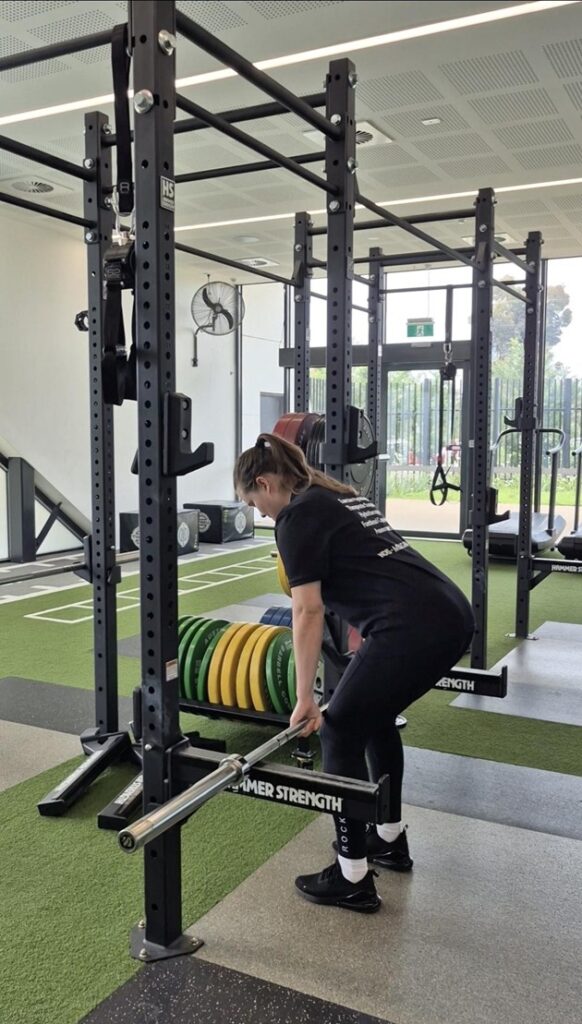
5.30am Wake up and head to the gym for own training session
6.45am Breakfast and get ready for the day
7.30am Pick up first client – an NDIS participant – from home
7.45am Gym-based strength rehabilitation session with NDIS participant. This client has an ongoing shoulder injury and very flexible (hypermobile) shoulders. Our work focuses on building shoulder strength and stability to reduce pain, improve function and increase confidence with everyday activities.
8.30am Back in the car to drive to the next appointment.
9.00am Gym-based strength program with an NDIS participant. The focus is on healthy ageing and improving whole-body strength to better manage scoliosis and lower back/pelvic pain, while also helping the participant achieve their personal goal of building upper body strength and muscle tone.
10am Drive to the next appointment.
11am At-home session with a Support at Home client. This elderly client has several interacting conditions. Our work with them focuses on both strengthening and cardiovascular fitness so that they can continue to be independent as long as possible, as well as improving pain they are experiencing in their hips and back.
12pm Travel to the next appointment.
12.30pm Home-based session with a private client. This client has lived with back pain for many years. We use resistance bands, dumbbells and functional exercises such as sit-to-stands, hip hinges and core strengthening to reduce pain, build confidence in movement and progress towards independent exercise.
1pm Back in the car to drive to the next appointment.
1.45pm Hydrotherapy session with a Support at Home client. The warm water allows us to improve strength, mobility and fitness with less pressure on painful joints. Every exercise is adapted to safely manage the client’s back pain, diabetes and heart condition while making exercise enjoyable and achievable.
3pm Quick packed lunch in the car, high in protein to help repair muscles after her own strength training session earlier in the day, before heading off to the final client.
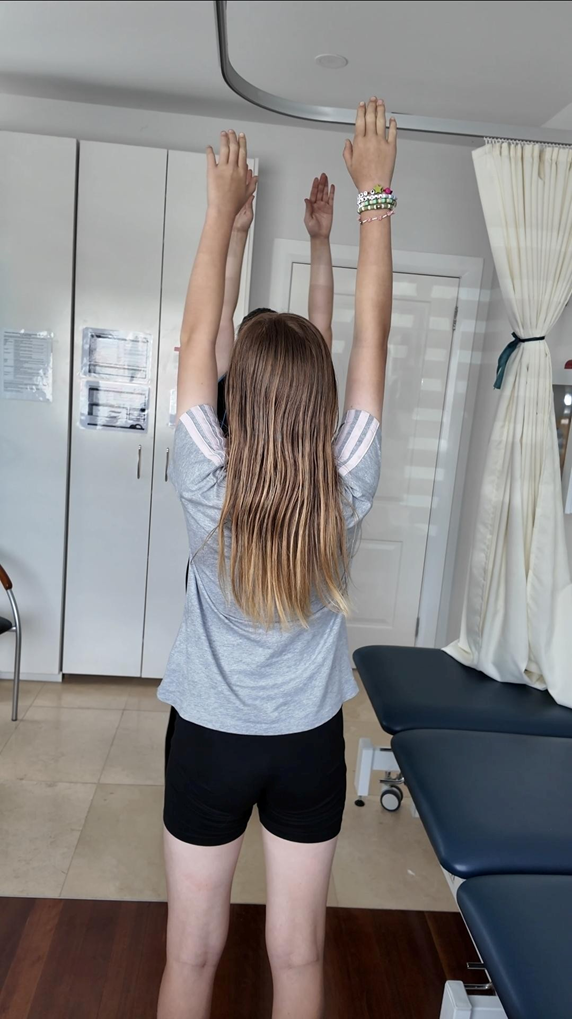
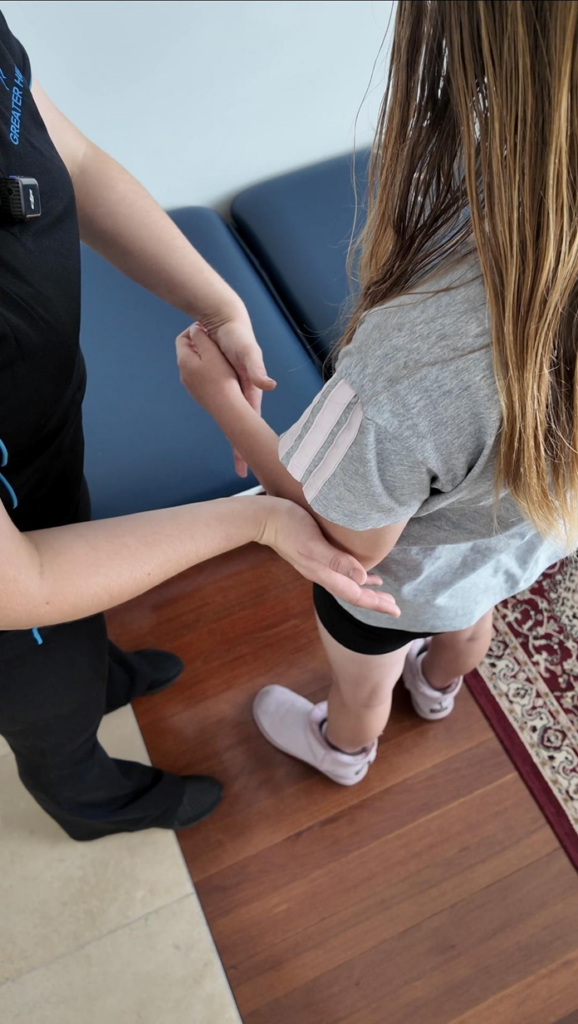
4.30pm After school home visit for an initial consultation with a teenager on an NDIS plan. Following an assessment with the participant and their carers, we identify goals and develop an exercise plan. Findings include reduced shoulder blade control and arm function following a nerve injury. Future sessions will include assisted mobility, serratus punches, wall slides and functional reaching exercises to improve movement and independence.
Evening Finish notes and reports for today’s clients and make sure everything’s ready for tomorrow. Spend time with family (sometimes testing and refining new techniques on them!).
Our goal is to help you
As you can see, Exercise Physiologists do much more than just count reps; we listen, design, prescribe, assess, adjust, record, review, report, and more.
It’s not always easy – but we’re motivated by a goal of helping our clients overcome challenges through movement. Our founder, Caroline, has experienced her own serious injuries and pain, and knows first-hand the powerful benefits of exercise in recovery. This drives her to help other people, while understanding what they’re going through.
If you or someone you know is living with a disability, has a chronic health condition or injury, is experiencing a flare up of an old injury, or is avoiding everyday activities because of pain, we can help.
Reach out today if you’d like to learn more about what we can do for you.
FAQs
What will I experience when working with an Exercise Physiologist?
When you first contact us, we’ll have an initial discussion about your situation, why you’re interested in working with us, your availability, and what type of delivery will suit you best (at home, in a gym, hydrotherapy, or other). We’ll also answer any questions you have at that stage.
At your first appointment we do some initial assessments of things like strength, mobility, balance and range of motion – using standard testing methods – and talk about what you want to achieve. Following this, we’ll design a program tailored just for you, that starts from where you are and gradually builds towards your goals.
We’ll then meet according to the plan we’ve made together – frequency, location, and pace of progress all depend on your own situation and goals. We regularly review and refine your program based on how you’re feeling and what we’re seeing.
Ultimately, our goal is that you won’t need us anymore. We aim to eventually work up to you having less pain, more strength, more confidence, and independence for life.
What training and accreditation does an Exercise Physiologist have?
Exercise Physiologists are university-qualified allied health professionals trained to assess physical function and prescribe exercise for people living with health conditions, injuries, disabilities, chronic pain, and complex medical needs. Because of this, they create exercise programs tailored not only to a person’s goals, but also to their health history, symptoms, medications, and individual circumstances.
In Australia, Exercise Physiologists are accredited through Exercise & Sports Science
Australia (ESSA), the national professional body for exercise and sport science practitioners. ESSA sets the professional standards that ensure Accredited Exercise Physiologists meet strict education, safety, and ethical practice requirements.
Where do you travel to?
We primarily deliver mobile services through home visits across the south-east, as well as in gyms and hydrotherapy centres in areas like Dandenong, Noble Park, Glen Waverley, Endeavour Hills, Narre Warren, Cranbourne, Cheltenham, Frankston and surrounding suburbs. We also have consulting rooms in Dandenong and are opening a private exercise studio in Noble Park.
We also offer limited appointments in Melbourne’s western suburbs, including Caroline Springs, Braybrook, Maribyrnong and Broadmeadows. If you’re located elsewhere, please get in touch — we’re always happy to discuss whether we can travel to you.
What health conditions can exercise help with?
Exercise can play an important role in managing conditions such as diabetes, heart disease, arthritis, osteoporosis, chronic pain, neurological conditions, mental health conditions, and many injuries.
At Greater Health, we also regularly support people living with disability, age-related loss of strength and balance, fatigue-related conditions, and those recovering from illness or injury.
Have more questions about Exercise Physiology? Visit our Frequently Asked Questions page.